Railroading Merit Badge
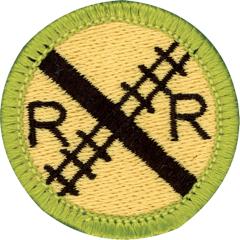
Overview
By earning this badge, Scouts can learn about the history of railroading, its place in modern society, careers in railroading, and hobbies related to railroading.
Requirements
- (1) Do THREE of the following:
-
(a) Name three types of modern freight trains. Explain why unit trains are more efficient than mixed freight trains.
Resources: Types of Freight Trains (video)
-
(b) Name one Class I or regional railroad. Explain what major cities it serves, the locations of major terminals, service facilities, and crew change points, and the major commodities it carries.
Resources: Class I Railroads in USA: What Are They, History, and Why Do They Matter (website), FRA Rail Network (website)
-
(c) Using models or pictures, identify 10 types of railroad freight or passenger cars. Explain the purpose of each type of car.
Resources: Every Type of Railcar Explained in 15 Minutes (video), Virtual Train Tour (website)
-
(d) Explain how a modern diesel or electric locomotive develops power. Explain the terms dynamic braking and radial steering trucks.
Resources: Why Locomotives Don’t Have Tires (video), Dynamic Braking | Diesel Electric Locomotives | Regenerative Braking (video), [Rail Insights] Take a Closer Look at the Wheel-Rail-Interface (video)
-
- (2) Do the following:
-
(a) Explain the purpose and formation of Amtrak. Explain, by the use of a timetable, a plan for making a trip by rail between two cities at least 500 miles apart. List the times of departure and arrival at your destination, the train number and name, and the type of service you want.
Resources: The History of Amtrak in 2 Minutes (video), Amtrak Map USA: Understand America’s Train Routes (video), Trip Planning Map (website), Amtrak Schedules & Timetables (website)
-
(b) List and explain the various forms of public/mass transit using rail.
Resources: Every Transit System That Works Explained in 9 Minutes (video)
-
- (3) Do ONE of the following:
-
(a) Name four departments of a railroad company. Describe what each department does.
Resources: What Is Rail Operations Management (website), MOW—Maintenance of Way (video), Departments—Pull Down Menu Under The Southern Pacific Story (website)
-
(b) Tell about the opportunities in railroading that interest you most and why.
Resources: Why Work for a Short Line or Regional Railroad? (website), Railroad Careers: Conductors (video), Metro Careers—Operations (video), Union Pacific—Train Crew (video), A Day in the Life of an Amtrak Conductor (video), Amtrak Police Department Careers (video), Amtrak On Board Services Jobs (video)
-
(c) Name four rail support industries. Describe the function of each one.
Resources: How Millions of Meters of Train Rails Are Made From Steel - Railroad Tracks Mass Production Line (video), Inside the Massive Factory Where Siemens Builds Trains (video), Track Inspections: Keeping Railroads Safe in Under 5 Minutes (video), Railway Freight Services (video), Why Chicago’s Rail Hub Is So Vital to the National Economy | WSJ (video)
-
(d) With your parent or guardian’s and counselor’s approval, interview someone employed in the rail industry. Learn what that person does and how this person became interested in railroading. Find out what type of schooling and training is required for this position.
Resources: The Informational Interview: Researching a Career (video)
-
- (4) Do the following:
-
(a) Explain the purpose of Operation Lifesaver and its mission.
Resources: Be Safe—Always Expect a Train (video)
-
(b) List 9 track basic safety tips to remember when you are around a railroad track.
Resources: Railroad Safety—Do’s and Don’ts (video), Track Safety Basics (website), See Train Tracks Ahead? Know What To Do (PDF)
-
(c) List 9 safety considerations that should be followed when walking near a railroad track.
Resources: Railroad Safety—9 Facts to Keep You Safe Near the Tracks and Avoid Train Accidents (website), The Dangers of Taking Photos on Train Tracks (video)
-
(d) Tell your counselor what a driver can do to safely operate near tracks.
Resources: Driving Safely Near Tracks (website)
-
(e) Explain safety precautions when using a light rail or commuter train.
Resources: Tracks and Transit—Safety in Passenger Rail Systems (video), Safety Around Streetcars and Light Rail (video)
-
-
(5) Explain the appearance and meaning of the following rail signs and signals:
Resources: Rail Signs and Signals (website)
-
(a) Passive signs and active signs
-
(b) Devices at the crossing (flashing red lights—with or without bells, flashing red lights and gates, and cantilever flashing lights)
Resources: Rail Crossing Types From Safety Perspectives (video), Devices at the Crossing (website)
-
(c) Markings on the road (pavement markings and stop bars)
Resources: Markings on the Road (website)
-
(d) Signs before the crossing (advance warning sign, advance warning sign for side streets, no train horn sign, and low ground clearance grade crossing sign)
Resources: Signs Before the Crossing (website)
-
(e) Signs along the railroad property (no trespassing sign)
Resources: Signs Along Railroad Property (website)
-
(f) Signs at the crossing (crossbuck sign, emergency notification system sign, multiple track sign, stop sign, and yield sign)
-
- (6) Do EACH of the following:
-
(a) Explain how railroad signals operate and show two basic signal types using color or configuration.
Resources: How Railroad Crossings Work (video), How To Read Railroad Signals (video)
-
(b) Explain the meaning of three horn signals.
Resources: How Trains Talk to Each Other | Horn Sounds | Train Safety (video), Railroad Safety: Train Horns and Grade Crossing Signals (website)
-
(c) Describe a way to signal a train for an emergency stop.
-
(d) Explain the use and function of the EOTD (end-of-train device), or FRED (flashing rear end device), used on the last car of most freight trains.
Resources: The End-of-Train Device (EOTD) and Its Impact on Railroading (website), End of Train Device (EOTD) or Flashing Rear End Device (FRED) (video)
-
- (7) Do ONE of the following special-interest options:
- (a) Option A—Model Railroading. With your parent or guardian’s and counselor’s approval, do TWO of the following:
-
(1) Draw a layout of your own model railroad or one that could be built in your home. Design a point-to-point track or loop with different routings. Include one of the following: turnaround or terminal or yard or siding.
Resources: Layout Planning (website), Model Railroad Layout Design for Beginners (video), Five Starter Track Plans That Make Model Railroading Fun (website)
-
(2) Build one model railroad car kit or one locomotive kit.
Resources: Modeling Safety (website), Model Railroading Safety and Etiquette (website), Tools (website)
-
(3) Name the scale of four popular model railroad gauges. Identify the scale of four model cars or locomotives.
Resources: Comparing Model Train Scales: T, Z, N, Tt, Ho, S, O, G Scales (video)
- (4) Locate the websites of four model railroad-related manufacturers or magazine publishers. Print information about their products and services, and discuss the information with your counselor.
-
(5) Build one railroad structure (from scratch or using a kit), paint and weather the structure, mount it on your layout or diorama, and make the surrounding area on the diorama scenic.
Resources: Weather Plastic Kit Buildings Easy—Detailed Guide DIY (video), Structures (website), Weathering (website)
-
(6) Alone or with others, build a model railroad or modular layout including ballast and scenery. Make electrical connections and operate a train. Describe what you enjoyed most.
Resources: How To Ballast Your Track—Model Railway Basics: Episode Six (video), Scenery (website)
-
(7) Participate in a switching contest on a timesaver layout and record your time.
Resources: Fun With Model Train Switching Puzzles (video), Switching Puzzle—Timesaver (Timelapse) (video), Classic Switching Puzzles — John Allen’s Timesaver (website)
-
(8) Explain the difference between powering and controlling a model railroad by using direct current, and powering and controlling a model railroad using digital command control.
Resources: Differences Between DC and DCC HO Locomotives (video), DC vs. DCC: What’s Best for Your Model Railroad?! (video), Adding Power (website)
-
- (b) Option B—Railfanning. With your parent or guardian’s and counselor’s approval, do TWO of the following:
-
(1) Visit a railroad museum, historical display, or a prototype railroad-sponsored public event. With permission, photograph, digitally record, or sketch items of interest. Explain what you saw and describe your photos, sketches, or video.
Resources: Railroading Museums in the US (website), Railroad Museum Etiquette (video)
- (2) Purchase tickets and ride a scenic or historic railroad. Under supervision, photograph the equipment and discuss with your counselor the historic significance of the operation.
- (3) Locate the website of four rail historical groups, then find information on the history of the rail preservation operations and purpose of each group. Talk with a member of one of the groups and find out how you might help.
- (4) Plan a trip by rail between two points. Obtain a schedule and explain when the train should arrive at two intermediate points. Purchase the tickets and make the trip. Explain to your counselor what you saw.
-
- (a) Option A—Model Railroading. With your parent or guardian’s and counselor’s approval, do TWO of the following:
Resources
- Railroading merit badge page
- Railroading merit badge PDF (local copy)
- Railroading merit badge pamphlet
- Railroading merit badge workbook PDF
- Railroading merit badge workbook DOCX
Note: This is an unofficial archive of Scouts BSA Merit Badges that was automatically extracted from the Scouting America website and may contain errors.